Tracking
Cost Per Lead vs Cost Per Qualified Lead
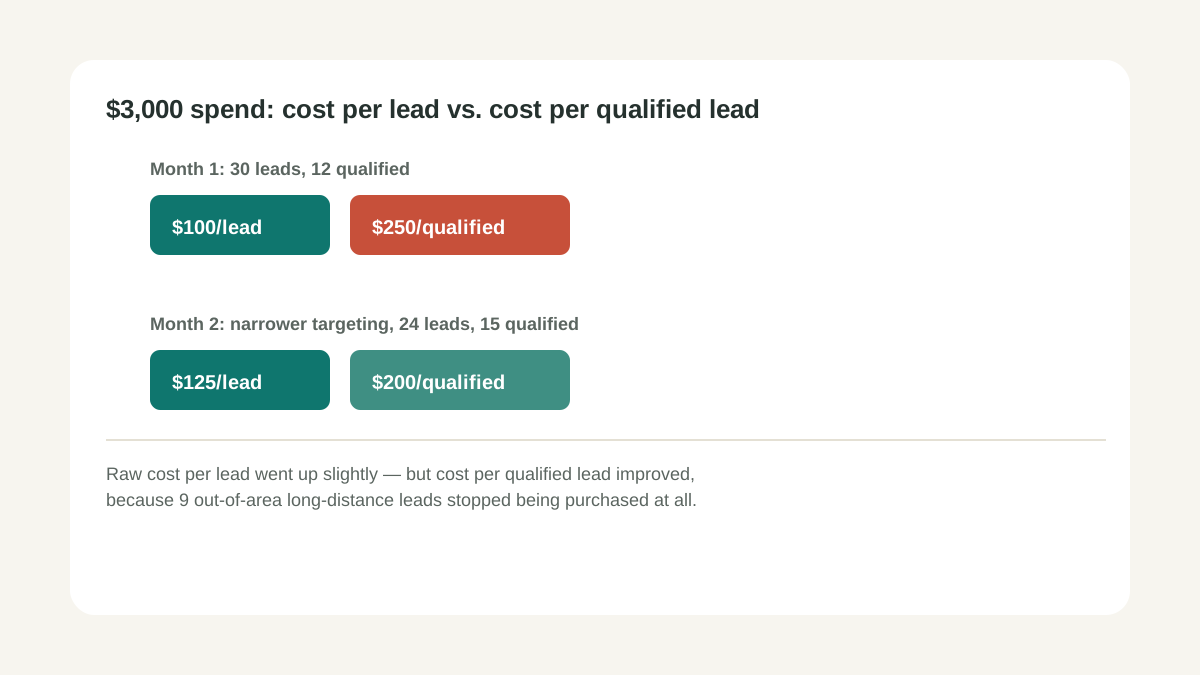
Cost per lead can look efficient while cost per qualified lead reveals whether the campaign is producing leads the business can actually convert into customers.
Cost per lead is only the first layer
Cost per lead divides total ad spend by the number of tracked leads. It is a useful starting metric, but it treats every completed form or phone call as equally valuable, regardless of whether that lead is in the service area, asking for an offered service, or reachable at all. Google's own guidance on improving conversion rate draws the same distinction between raw conversion volume and outcomes that actually matter to the business: https://support.google.com/google-ads/answer/2404198
Qualified leads show business value
A qualified lead matches the service, location, budget, timing, and basic fit required by the business. If only one out of five leads is qualified, the real acquisition cost for a usable opportunity is much higher than the cost-per-lead number suggests on its own.
Define what qualified means before reviewing reports
Qualification should be defined in writing before the report is reviewed, not argued about after a disappointing month. A qualified lead might be in the service area, requesting a service the business offers, realistic on budget, and reachable by phone or email. Without a shared definition, two people can look at the same ten leads and disagree about how many were actually good.
Track disqualification reasons, not just the count
Common reasons a lead fails qualification include wrong service, outside the service area, unrealistic budget, spam, duplicate submission, or no response after multiple attempts. Recording the reason, not just marking a lead as bad, turns the qualification process into a source of specific fixes for targeting, ad copy, or the landing page.
Worked example: a moving company's monthly report
A moving company spends $3,000 in a month and records 30 leads through its website form and call tracking number. Cost per lead is straightforward: $3,000 ÷ 30, or $100 per lead.
After the sales team reviews each lead, only 12 turn out to be qualified — in the service area, moving on a realistic timeline, with a move size the company handles. Cost per qualified lead is $3,000 ÷ 12, or $250.
Digging into the 18 disqualified leads, the team finds a pattern: 9 were long-distance moves outside the company's actual coverage area, even though the ad's location targeting technically included those cities as a buffer zone. Narrowing the geographic targeting the following month reduces total lead volume to 24, but qualified leads rise to 15 — a lower raw lead count, and a meaningfully lower cost per qualified lead, because the wasted long-distance clicks stopped being purchased in the first place.
| Month | Spend | Total leads | Qualified leads | Cost per lead | Cost per qualified lead |
|---|---|---|---|---|---|
| Month 1 (broad targeting) | $3,000 | 30 | 12 | $100 | $250 |
| Month 2 (narrowed targeting) | $3,000 | 24 | 15 | $125 | $200 |
Cost per lead actually got worse between the two months — $100 to $125 — while cost per qualified lead improved. Reporting only the first number would have made the fix look like a regression.
Common mistakes when comparing the two metrics
Reporting only cost per lead to stakeholders. A monthly report that shows only cost per lead can look successful while hiding that most of those leads never had a realistic chance of becoming a customer.
Recalculating cost per qualified lead too infrequently. Waiting until the end of a quarter to check qualification hides a full quarter of a fixable problem. A monthly, or even biweekly, review catches drift earlier.
Letting qualification standards drift between reviewers. If the person marking leads as qualified changes their standard from month to month, or if two different people apply different bars, the cost-per-qualified-lead trend becomes unreliable regardless of the underlying campaign quality.
Treating cost per qualified lead as fixed once measured. The qualified rate can change with seasonality, targeting changes, or new competitors. Recheck it periodically instead of assuming a rate measured once will hold indefinitely.
Frequently asked questions
How many leads are needed before cost per qualified lead is reliable? As a rough guide, wait for at least 20 to 30 scored leads before treating the rate as more than a preliminary signal. Below that, one or two unusual leads can swing the percentage significantly.
Should cost per qualified lead replace cost per lead in reporting? No, use both together. Cost per lead shows how much volume the campaign is generating for the spend; cost per qualified lead shows how much of that volume is actually useful to the business.
What if the sales team disagrees on what counts as qualified? Write a specific, checklist-style definition covering service area, service type, budget range, and reachability, and review a handful of borderline examples together until the team applies it consistently.
Does a rising cost per qualified lead always mean the campaign is getting worse? Not necessarily. It can also reflect a deliberate narrowing of targeting that trades some volume for a higher qualification rate, or a seasonal shift in the type of enquiries arriving. Compare the trend against total qualified volume and revenue, not the cost figure alone, before concluding the campaign is declining.
Watch how the two metrics move together
The most useful review looks at both numbers changing at once, not either one in isolation. A campaign where cost per lead rises slightly while cost per qualified lead falls is usually healthier than one where both numbers fall together, because the second pattern often means more low-quality volume rather than better targeting.
When reporting to a business owner or stakeholder who is not deep in the account daily, present both figures side by side with a one-line explanation of what changed and why, rather than a single headline number that hides the tradeoff being made.
Qualification tracking checklist
- Qualified is defined in writing before the report is reviewed, not during the review.
- Each disqualified lead is tagged with a specific reason, not just marked as unqualified.
- Cost per lead and cost per qualified lead are both reported side by side.
- The qualified rate is rechecked at least monthly, since targeting and seasonality can shift it.