Google Ads basics
When to Hire a Google Ads Specialist
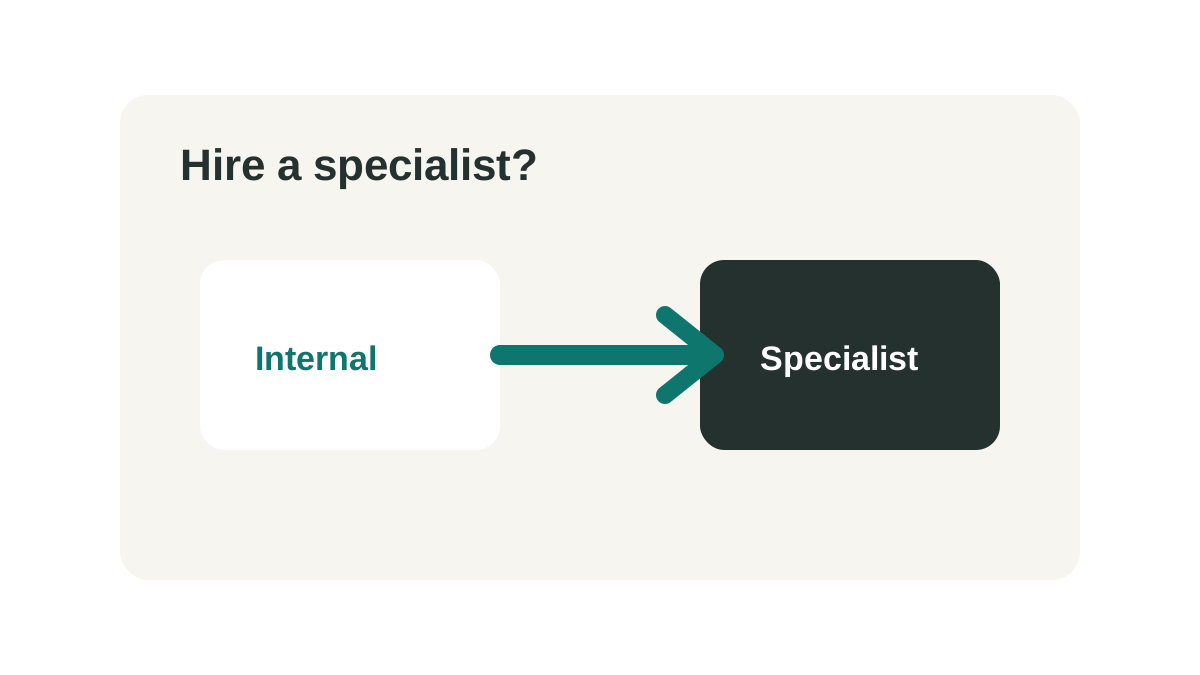
A business can manage simple campaigns internally, but specialist help becomes valuable when spend, complexity, or tracking risk increases.
Hire when tracking is unclear
If the account cannot connect spend to qualified leads or sales, expert setup can prevent months of poor decisions.
Hire when spend is meaningful
The higher the monthly budget, the more expensive small mistakes become. Professional management can be justified when wasted spend exceeds the cost of help.
Ask better questions
Before hiring, ask how they measure lead quality, how often they review search terms, and what changes they made in similar accounts.
Keep simple work in-house when possible
Some accounts do not need full management immediately. A business with one service, one location, a small budget, and clean tracking may only need a setup review or periodic audit. Paying for full management too early can reduce the budget available for actual media testing.
Watch for warning signs
Specialist help becomes more important when campaigns have multiple locations, high cost per click, poor tracking, unclear conversion quality, or several landing pages. It is also useful when the team cannot explain why performance changed.
Define the engagement
Before hiring, decide whether the business needs setup, tracking repair, landing page advice, monthly management, or a one-time audit. A clear scope makes it easier to judge whether the specialist is solving the right problem.
Ask for transparency
A specialist should be able to explain the account structure, the tracking setup, and the reason behind major changes. The business does not need to manage every detail, but it should understand how decisions are made.
Keep ownership of key assets
The business should retain access to the ad account, landing pages, analytics, and conversion data. Losing access can make it difficult to audit performance or change providers later.
Review fit periodically
As spend, goals, and internal skill change, the right level of outside help may also change.
Example hiring scenarios
A small local business spending $500 per month on one service may not need full monthly management. A one-time setup review, tracking check, or landing page audit may be enough.
A business spending $5,000 per month across several services and locations has a different risk profile. If tracking is incomplete or search terms are not reviewed, a few weeks of waste can cost more than professional help.
What to prepare before contacting a specialist
- Monthly budget and target service areas.
- Current campaign goals and lead targets.
- Access to Google Ads, analytics, landing pages, and call tracking.
- Recent search terms, conversion data, and lead quality notes.
- A short explanation of what is not working.
Red flags during the hiring process
Be careful with anyone who guarantees a specific number of leads without reviewing the offer, market, budget, tracking, and landing page. Also be cautious if they will not explain ownership of the ad account or how conversions are measured.
A useful specialist should make the account easier to understand over time, not more opaque.
How to measure the relationship
Judge the engagement by the quality of decisions, not only by activity. Good management should improve search term control, tracking confidence, lead quality visibility, landing page feedback, and budget allocation.
If reports only repeat impressions, clicks, and cost without explaining business impact, the business may still be missing the insight it hired for.
Define the problem before buying management
Hire for a concrete gap: technical tracking is unreliable, search-term review is not happening, the account has enough spend to justify structured testing, or the team needs a repeatable reporting process. “We need more leads” is a business objective, not a brief. A capable specialist still needs the service margins, locations, sales capacity, and definition of a qualified lead.
Ask a prospective partner to explain what they would measure first, which assumptions they would validate, and what they would not promise. Be cautious of fixed lead-volume guarantees without a clear definition of lead quality and the factors outside their control.
Evaluate the handoff, not only the pitch
The business should retain access to the Google Ads account, analytics property, tag setup, landing pages, and lead records. Require a written list of conversion actions, naming conventions, budget authority, reporting cadence, and the person who can approve changes. If an engagement ends, the account should remain understandable to the owner.
Questions worth asking
- Which conversion action will guide bidding, and how will it be tested?
- How will search terms and invalid leads be reviewed?
- What data does the business need to provide each month?
- What is the first 30-day plan, and what evidence would justify a budget increase?
- Who owns campaign assets and historical data?
Google’s conversion reporting can include different actions and attribution settings, so a report must state what is included before cost-per-conversion is interpreted: https://support.google.com/google-ads/answer/6270625
Worked example: cost of delay vs. cost of help
A dental practice spending $4,000 per month discovers after six weeks that its call tracking was never connected to the ad platform, so every phone lead was invisible to reporting. During those six weeks, roughly $6,000 in ad spend was effectively unmeasured — the practice could not tell which keywords or ads produced booked appointments.
A specialist audit to fix the tracking costs $600. Measured against six weeks of unmeasured spend, the fix pays for itself several times over, independent of whether ongoing management is needed afterward. This is the calculation worth making before hiring: not "can we afford a specialist," but "what is six more weeks of the current blind spot costing us."
The same math works in reverse. A business spending $400 per month on one clearly tracked service, with a landing page that already converts well, may find that a $600 monthly retainer costs more than the media budget itself. In that case, a one-time audit or a few hours of consulting is a better match for the size of the account than ongoing management.
When not to hire yet
Do not use an agency to compensate for an unclear offer, a broken booking process, no ability to answer leads, or no budget for meaningful traffic. Fixing those constraints first makes any specialist engagement easier to evaluate and more likely to produce useful learning.