Google Ads basics
Google Ads vs Facebook Ads for Local Businesses
Google Ads and Facebook Ads usually solve different problems for a local business. The better starting channel depends on whether people are already searching for the service or need to be introduced to it first.
Google Ads captures existing demand
Google Search campaigns are strongest when customers already know what they need and are actively looking for it. A person searching for "emergency electrician [city]," "divorce attorney near me," or "same-day AC repair" is showing direct, time-sensitive intent. The ad meets a decision already in progress. Google frames this same idea in its own overview of the platform, describing Google Ads as a way to reach people at the moment they are already searching: https://support.google.com/google-ads/answer/6349091
The tradeoff is cost. High-intent searches in competitive categories — legal services, home emergencies, healthcare — can carry a high cost per click, and a weak landing page wastes that expensive click immediately.
Facebook Ads creates or shapes demand
Facebook and Instagram ads usually work better when the offer can be explained visually or when the customer is not actively searching yet. Home improvement financing offers, fitness programs, beauty services, local events, and seasonal promotions often fit this pattern, because the audience is not typing a query — they are scrolling a feed.
The campaign needs stronger creative because the ad has to earn attention before it can earn a click. A generic product photo with no offer rarely performs as well as a specific, visually clear promotion.
Compare the two channels directly
Intent. Google Ads meets people mid-decision. Facebook Ads introduces people to a decision they were not actively making yet.
Targeting basis. Google targets by what someone typed. Facebook targets by who someone is and what they have shown interest in — demographics, behaviors, and past engagement.
Creative demands. Google Ads can succeed with a clear, relevant text ad. Facebook Ads usually needs a strong image or video and a specific, visible offer to stop the scroll.
Typical cost pattern. Google clicks in competitive local categories often cost more per click, but usually convert at a higher rate because of existing intent. Facebook clicks are frequently cheaper, but the resulting leads may need more qualification before they are sales-ready.
Sales cycle fit. Urgent, high-intent services such as emergency repairs, legal help, or medical care usually favor Google Ads first. Considered purchases with a visual or lifestyle angle, such as renovations, memberships, or events, often respond well to Facebook Ads.
Worked example: a kitchen remodeling company testing both channels
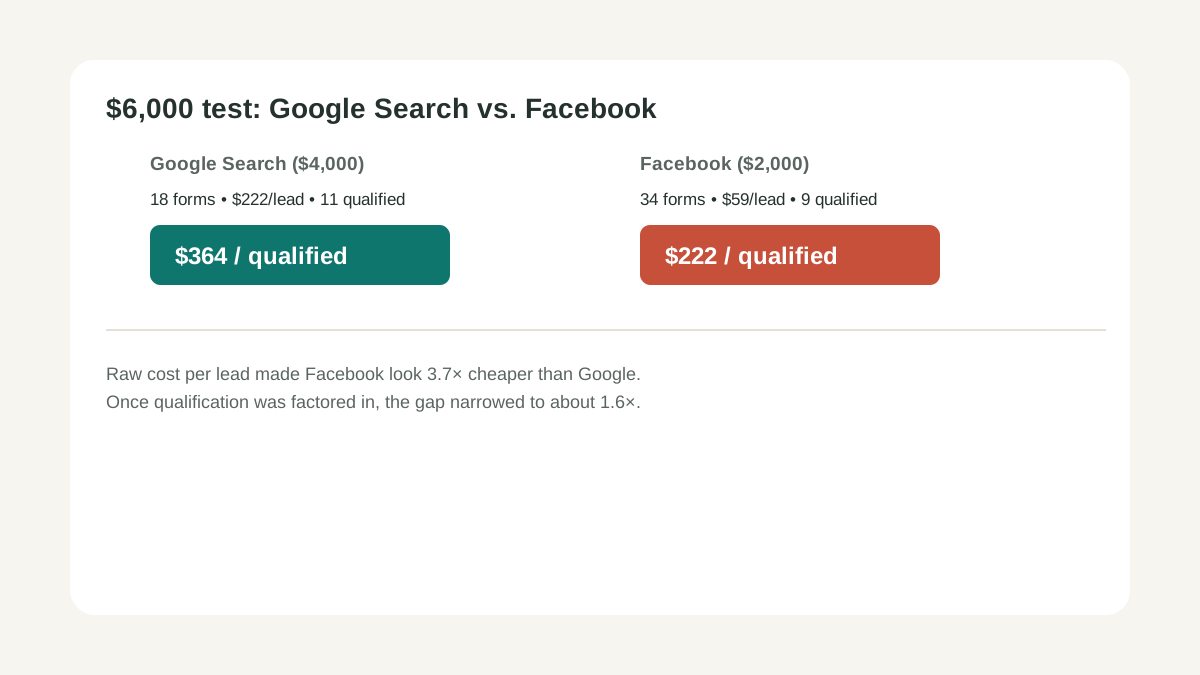
A kitchen remodeling company splits a $6,000 monthly test budget: $4,000 to Google Search for terms like "kitchen remodel cost [city]" and "kitchen renovation contractor," and $2,000 to Facebook Ads showing before-and-after project photos to a local audience interested in home improvement.
After 30 days, Google Search produced 18 form submissions at roughly $222 each, with 11 rated as qualified — homeowners with a real project and a realistic budget. Facebook produced 34 form submissions at about $59 each, but only 9 were qualified; many respondents were early-stage browsers not ready to commit to a renovation timeline.
Measured by cost per qualified lead, Google Search cost about $364 and Facebook cost about $222 — closer than the raw cost-per-lead numbers suggested, once quality was factored in. The business kept both channels running, but adjusted Facebook's creative to include a rough price range in the ad itself, which reduced the volume of early-stage browsers in the following month.
| Metric | Google Search | Facebook Ads |
|---|---|---|
| Spend | $4,000 | $2,000 |
| Form submissions | 18 | 34 |
| Cost per lead | ~$222 | ~$59 |
| Qualified leads | 11 | 9 |
| Cost per qualified lead | ~$364 | ~$222 |
Facebook's raw cost per lead looked nearly four times cheaper than Google's. Once quality was factored in, the gap shrank to a difference the business could reasonably explain by intent, not channel quality.
Common mistakes when comparing the two channels
Judging both channels by the same metric without adjusting for intent. A $59 Facebook lead and a $222 Google lead are not directly comparable without knowing how many of each were actually qualified.
Using the same landing page and message for both channels. A page written to confirm an already-decided need works poorly for Facebook traffic, which often needs more context and reassurance before taking the same action.
Giving up on a channel after one slow week. Facebook campaigns in particular often need more impressions and some creative testing before performance stabilizes, especially for a new audience.
Running both channels without separating lead sources in reporting. If Google and Facebook leads land in the same untagged form, it becomes impossible to know which channel is actually producing qualified opportunities.
Frequently asked questions
Which channel should a brand-new local business start with? If the service is something people actively search for when they need it — plumbing, legal help, urgent repairs — start with Google Ads. If the offer needs to be seen and explained, such as a new studio or a visual home improvement service, Facebook Ads can build initial awareness alongside or before Google Ads.
Can a small budget support both channels at once? It can, but splitting an already small budget across two channels risks not collecting enough data on either. A common approach is to fully fund one channel for an initial test period, then add the second once the first is generating reliable data.
Do the same tracking principles apply to both platforms? Yes. Both channels need a tested conversion path, a way to separate qualified from unqualified leads, and a regular review of cost per qualified lead rather than raw lead volume.
How long should a Facebook test run before judging it against Google Ads? Give a new Facebook campaign at least three to four weeks and enough spend to exit the platform's early learning phase before comparing it directly to an established Google Search campaign. Judging a brand-new Facebook audience against a mature Google account after a few days usually favors Google Ads unfairly.
Channel comparison checklist
- Search intent is clear enough to justify starting with Google Ads, or the offer needs visual introduction, favoring Facebook Ads first.
- Each channel has its own tracked, qualified conversion path.
- Creative for Facebook includes a specific, visible offer rather than a generic service photo.
- Cost per qualified lead, not cost per lead, is the number used to compare channels.
- A decision date exists for when to add the second channel or reallocate budget between them.