Google Ads basics
How to Improve Quality Score Without Increasing Budget
Quality Score reflects three components: expected click-through rate, ad relevance, and landing page experience. Raising the budget does not fix weak relevance in any of the three — tighter account structure usually does.
Understand what Quality Score actually measures
Quality Score is a diagnostic signal, not a business goal. It estimates how relevant a keyword, ad, and landing page are to a specific search, compared with other advertisers bidding on the same auction. A higher score can lower the cost needed to achieve a given ad position, but it is a byproduct of relevance — not something to chase directly for its own sake. Google's own documentation defines the same three components and explains why the score is diagnostic rather than an auction input: https://support.google.com/google-ads/answer/6167118
Tighten keyword groups
Group similar searches together so the ad text can speak directly to the shared intent. An ad group covering "plumber," "drain cleaning," and "water heater installation" together forces one generic ad to try to answer three different searches. Splitting these into three tightly themed ad groups, each with its own ad copy, usually improves both relevance and expected click-through rate without spending an extra dollar.
Match ads to landing pages precisely
The landing page should support the same service, location, and promise used in the ad — not a related but different page. If the ad promises "same-day drain cleaning" and the page opens with a list of every plumbing service the company offers, the mismatch reduces landing page experience even if the page itself is well designed.
Remove poor-fit searches
Review the search terms report and add negative keywords for searches that are technically related but commercially irrelevant. Fewer clicks from mismatched searches can improve click-through rate and relevance signals over time, since the keyword is no longer being matched against searches it was never meant to serve.
Improve expected click-through rate deliberately
Ads should reflect the specific language people use in their searches, not generic marketing phrases. A headline that names the service, location, and problem — "Same-Day Water Heater Repair in [City]" — usually earns a stronger click-through rate than a vague promise like "Quality Plumbing You Can Trust." Test two or three headline variations against each other rather than guessing at what will perform.
Improve landing page experience
The page should load quickly, work cleanly on mobile, and make the next step obvious within the first few seconds. It should also repeat the same service and offer mentioned in the ad, so the visitor does not have to search the page to confirm they landed in the right place.
Worked example: a plumbing company's Quality Score cleanup
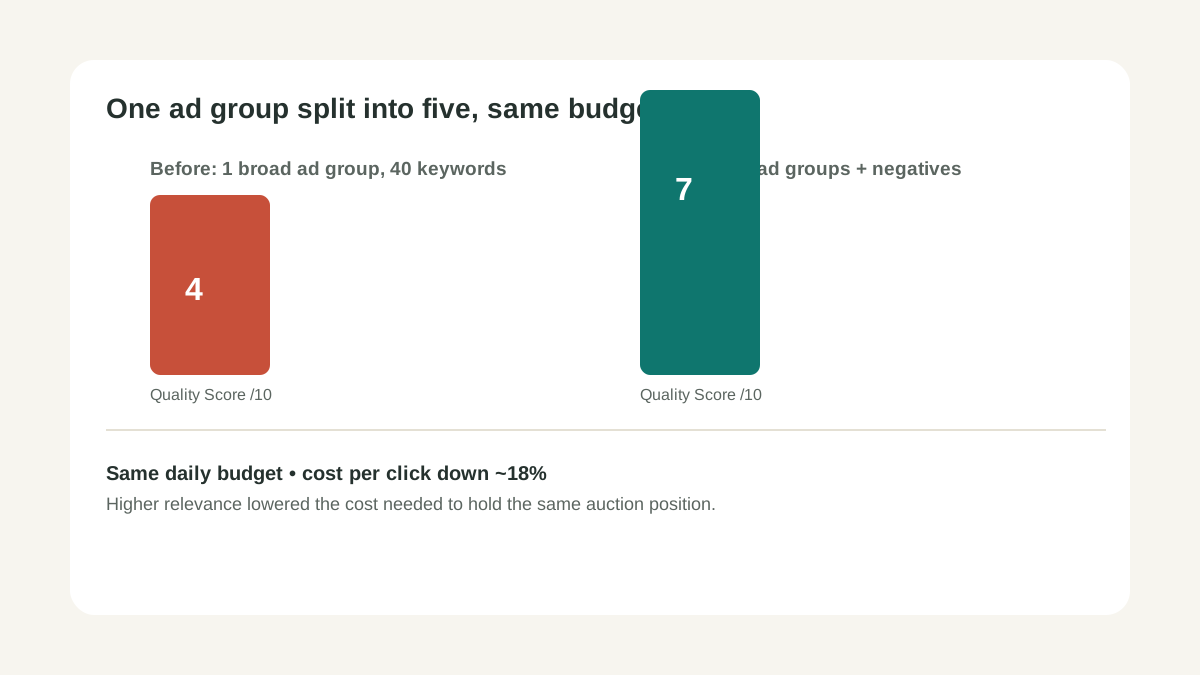
A plumbing company running one broad ad group called "Plumbing Services" for 40 mixed keywords has an average Quality Score of 4 out of 10 across the account. The team splits the ad group into five tighter groups — emergency plumbing, drain cleaning, water heater repair, water heater installation, and general repairs — each with its own ad copy and, where the difference justified it, its own landing page section.
Search terms are reviewed and 22 negative keywords are added for searches like "plumbing jobs," "plumbing supplies," and "DIY drain cleaning" that had been matching against the broad keyword list. Ad headlines are rewritten to name the specific service and city instead of a generic slogan.
Three weeks later, without any change to the daily budget, the average Quality Score across the five new ad groups rises to 7, and the average cost per click for the same keywords drops by about 18%, since higher relevance scores reduce the cost needed to hold the same ad position in the auction.
Common mistakes when trying to improve Quality Score
Chasing the score instead of the underlying relevance. A campaign can have a high Quality Score and still produce poor leads, or a lower score and still be profitable. Review Quality Score alongside cost, conversion rate, and lead quality — not as a standalone goal.
Changing too many variables in the same week. Restructuring ad groups, rewriting every ad, and changing the landing page all at once makes it impossible to know which change actually moved the score or the performance.
Ignoring mobile landing page experience. Google evaluates the mobile experience specifically, and a page that performs acceptably on desktop but loads slowly or displays awkwardly on mobile can drag down the landing page experience component even when desktop metrics look fine.
Assuming a low score on a new keyword is permanent. New keywords often start with a below-average or not-yet-determined score until enough auction data accumulates. Judge new keywords after a reasonable data sample, not within the first few days.
Frequently asked questions
Does Quality Score directly affect cost per click? Yes, indirectly. A higher Quality Score generally means a lower cost is needed to achieve the same ad position in the auction, because the platform's ranking formula favors relevance alongside bid amount.
How quickly can Quality Score improve after account changes? Some signals can update within days, but a reliable new score usually needs a couple of weeks of fresh auction data across the restructured ad groups before it stabilizes.
Is a 10/10 Quality Score necessary? No. Many profitable accounts run keywords in the 6 to 8 range. The goal is removing clear relevance problems, not maximizing the number itself.
Quality Score cleanup checklist
- Ad groups are split by tightly related search intent, not by broad service category.
- Every ad headline names the specific service, location, or problem it answers.
- The landing page repeats the exact promise made in the ad.
- Search terms are reviewed regularly and irrelevant matches are excluded.
- Mobile landing page experience is tested separately from desktop.